SMARTPHONES • OFFICIAL TEASER & LEAKS • 6 min read
Just when you thought your current smartphone was brand-new, Oppo is back at it again. Smartphone buyers often joke that Reno phones drop every four months like clockwork, and Oppo seems determined to prove them right. Barely has the dust settled on the previous generation before official promotional teasers for the Oppo Reno 17 series have surfaced on Chinese social media. Scheduled for an official unveiling in China on Monday, 9 November 2026, the Reno 17 lineup brings a sharp redesign with a flat display, a refined metal mid-frame, and a high-density 8,000mAh Silicon-Carbon battery.
For millions of video game enthusiasts worldwide, the single biggest question hanging over Nintendo's upcoming next-generation console has finally received an official answer. Speaking directly to investors and fans during the Corporate Management Policy Briefing on 6 November 2026, Nintendo President Shuntaro Furukawa confirmed that the successor to the Nintendo Switch will feature backward compatibility with existing Nintendo Switch software. In addition, the company's lucrative subscription service, Nintendo Switch Online, will transfer directly to the new hardware platform without interruption.
For nearly eight years, smartphone industrial design has adhered to an unchallenged dogma: make phone displays taller, narrower, and increasingly unwieldy in one hand. From the original 18:9 transition in 2017 to the extreme 20:9, 21:9, and 22:9 aspect ratios dominating modern flagships, handsets gradually evolved into elongated glass batons. However, a major industry shift is quietly gathering momentum. Fresh supply chain leaks published on 6 November 2026 confirm that Xiaomi, Oppo, Vivo, and Honor are actively prototyping non-folding, wide-screen candybar smartphones, following the trail blazed by Huawei's groundbreaking Pura X View.
Samsung's next generational flagship family has officially breached regulatory databases and supply chain leak channels. On 6 November 2026, dual revelations surfaced across Europe and Asia: official Danish regulatory listings from UL Solutions confirmed baseline charging parameters for the base Galaxy S27, while detailed factory CAD dummy units revealed an unexpected physical redesign for the crown-jewel Galaxy S27 Ultra. Between a re-engineered camera island built for magnetic accessories and the continuation of Samsung's conservative 25W charging policy, the upcoming flagship generation is already stirring passionate debate.
Xiaomi has officially commenced the global deployment of HyperOS 4, its flagship operating system update built on the newly minted Android 17 platform. Moving decisively beyond cosmetic tweaks, this generation introduces a foundational restructuring of Xiaomi's task execution architecture, paired with the striking new Soft Light Glass design philosophy. With over eighty devices scheduled across Xiaomi, Redmi, and POCO portfolios through December 2026, HyperOS 4 delivers massive leaps in real-world battery endurance, memory retention, and native file parity with Apple iOS devices.
Following its formal unveiling late last month, Motorola's most ambitious luxury flagship has finally arrived at retail. Open sales for the Motorola Signature 27 kick off in India tomorrow, Thursday, 5 November 2026, at 12:00 PM IST exclusively via Flipkart and the Motorola India website. Positioning itself as an elite alternative to conventional glass slabs, the device pairs Qualcomm's flagship Snapdragon 8 Elite Extreme silicon with artisanal materials, diamond-infused thermal paste, and custom acoustic architecture tuned in direct partnership with Bang and Olufsen.
FLAGSHIP SMARTPHONES • REGULATORY FILINGS • 6 min read
India's premium smartphone segment is preparing for a major shakeup as Vivo readies its next generation imaging flagships. Regulatory filings spotted on India's Bureau of Indian Standards (BIS) database confirm that the Vivo X500 series has formally secured local certification. Moving beyond its traditional dual-model strategy, Vivo is introducing three distinct handsets to Indian retail channels: the standard Vivo X500, the Vivo X500 Pro, and a top-of-the-line Vivo X500 Pro Max. With domestic launch dates tracking toward 25 November 2026, the lineup brings 200MP periscope zoom capabilities, massive silicon-carbon battery packs up to 8,000mAh, and MediaTek's latest Dimensity 9600 series silicon to Indian shelves.
Following last week's teaser that reignited interest in homegrown Indian electronics manufacturing, Karbonn Mobiles has officially announced the retail rollout of its ambitious Rebel lineup. Debuting exclusively via Amazon India starting Wednesday, 4 November 2026, the series comprises two aggressively priced models: the baseline Karbonn Rebel and the enhanced Karbonn Rebel Pro. Designed specifically to challenge the dominance of Chinese budget brands in Tier 2 and Tier 3 cities, both handsets combine massive battery endurance up to 7,000 mAh with an uncompromising software promise of pure stock Android free of ads.
PREMIUM SMARTPHONES • MARKET ANALYSIS • 7 min read
Imagine walking into a tech retailer with a budget of ₹1.4 lakh. On one side of the counter sits an Android flagship boasting staggering hardware numbers: a 3nm flagship processor, a massive 8,000 mAh silicon-carbon cell, 80W flash charging, and a pair of 200 MP cameras tuned by Hasselblad. On the other side sits an iPhone that charges slower, carries smaller optical sensors, and packs a more modest battery, yet costs just ₹9,901 more. For millions of Indian premium buyers, the choice is surprisingly straightforward, and it has almost nothing to do with megapixel counts or charging wattage.
PRODUCTIVITY LAPTOPS • HARDWARE LAUNCH • 6 min read
For Indian college students, coding learners, and mobile professionals shopping with a budget between ₹50,000 and ₹60,000, finding an uncompromising laptop has always meant making painful trade-offs. Brands typically force buyers to choose between decent processing power or durable all-metal construction, with battery capacity almost always downgraded to 45Wh or 50Wh. The newly launched Redmi Book 14 and Redmi Book 16 directly tackle this compromise, packing hybrid Intel Core 7 processors, sharp 2.8K 120Hz displays, all-metal sandblasted unibodies, and massive 72Wh batteries that redefine budget productivity endurance.
At the Satish Dhawan Space Centre in Sriharikota, the Indian Space Research Organisation (ISRO) has entered the final countdown for mission GSLV-F18. The heavy-lift rocket carries NVS-03, India's newest second-generation navigation satellite designed to bolster the sovereign Navigation with Indian Constellation (NavIC) network. While space missions often seem distant from daily life, NVS-03 represents the most significant consumer navigation upgrade in Indian history. By broadcasting across the civilian L1 frequency band, the satellite brings native, highly accurate satellite positioning to standard consumer smartphones without requiring expensive dedicated hardware.
BUDGET SMARTPHONES • INDUSTRY ANALYSIS • 6 min read
In the mid-2010s, Indian electronics brands like Micromax, Karbonn, and Lava controlled over fifty percent of the domestic mobile phone market. The arrival of aggressive, heavily subsidized Chinese brands like Xiaomi, Realme, and Transsion completely reshuffled the landscape, pushing homegrown manufacturers into near obscurity. Now, veteran brand Karbonn Mobiles is mounting a strategic comeback with its newly teased Karbonn Rebel 5G lineup, targeting the sub-₹15,000 segment with a compelling proposition: zero bloatware, local manufacturing, and pure stock Android.
In an era dominated by oversized touchscreens and constant digital notifications, HMD Global has taken a refreshing, human-centered approach to mobile hardware. The newly announced Nokia 2360 Flip is a modern clamshell phone engineered specifically for senior citizens and young students. Built around safety and ease of use, the device pairs a classic folding design with an innovative feature called Family Assist, enabling family members to remotely configure and manage the phone using encrypted background SMS commands without requiring an active mobile internet connection.
Motorola has officially confirmed that its most ambitious flagship smartphone in years, the Motorola Signature 27, will make its Indian debut on Wednesday, 5 November 2026. Designed to challenge established premium devices from Samsung and Apple, the handset pairs extreme raw performance with specialist hardware collaborations. Armed with Qualcomm's 3nm Snapdragon 8 Elite Extreme silicon, an unprecedented 200 MP periscope zoom lens, acoustic tuning from Danish hi-fi icon Bang & Olufsen, and an industry-leading seven-year software guarantee, Motorola is making an aggressive statement in the ultra-premium mobile market.
Starting Saturday, 1 November 2026, the Indian mobile experience undergoes its most profound regulatory shift in over a decade. Under joint directives from the Department of Telecommunications (DoT) and the Telecom Regulatory Authority of India (TRAI), telecommunications operators Reliance Jio, Bharti Airtel, and Vodafone Idea (Vi) are switching on Calling Name Presentation (CNAP) across the country. Whenever an unknown phone number calls your device, your screen will display the caller's officially verified government KYC name. Operating directly across 4G and 5G cellular switches without apps, CNAP promises to eradicate anonymous phishing and imposter fraud, while triggering an intense debate regarding personal privacy.
Quick Answer: Apple officially addressed reports of inner folding screen cracks on the newly released iPhone Duo on 28 October 2026, stating the issue affects a small number of units. The company instructs impacted users to contact AppleCare for replacement hardware as teardown analysts investigate mechanical stress points along the central hinge.
Published: 28 October 2026. Last updated: 28 October 2026. Verified against official Apple media statements, authorized service provider technical bulletins, and independent iFixit teardown logs.
An early iPhone Duo unit exhibiting a bright display failure line and central crease fracture following initial unboxing. Photo: Community / User Reports.
When Apple released the iPhone Duo on 23 October 2026, the device represented the culmination of nearly a decade of foldable display research in Cupertino. Sporting an ultra-thin 5.2mm unibody, custom dual-cell battery architecture, and an expansive flexible OLED canvas running iOS 27, it was hailed by reviewers as the most refined first-generation foldable hardware ever engineered. Yet within less than a week of retail deliveries, that triumphant launch narrative has collided with an all-too-familiar hardware crisis.
Over the past forty-eight hours, an influx of early adopters across Reddit, X, and technical discussion forums have documented catastrophic failures on their inner displays. Users describe hearing faint clicking or popping noises while opening the phone, followed immediately by vertical hairline fractures down the central crease, bleeding black pixel ink, and blinding horizontal laser lines of stuck green pixels. Today, Apple officially broke its silence on the viral reports.
Quick Answer: Between the iPhone 17 Pro and upcoming iPhone 18 Pro, buying a higher 512GB storage variant of the iPhone 17 Pro offers superior value. The iPhone 18 Pro introduces a mechanical variable aperture mechanism prone to drop failure, while the 17 Pro delivers clean solid-state optics, identical real-world speed, and vital storage headroom for Apple Intelligence at lower prices.
Published: 25 October 2026. Last updated: 25 October 2026. Checked against official Apple technical sheets, supply chain reports from Ming-Chi Kuo, and Indian retail pricing indices.
Flagship evolution: The iPhone 17 Pro in Cosmic Orange (left) alongside the upcoming iPhone 18 Pro in Deep Burgundy (right), highlighting the horizontal camera visor bar and the primary variable aperture lens.
Every autumn in India, premium smartphone buyers confront the same dilemma: buy the polished current-generation flagship during Diwali discounts, or wait twelve months for the next model. With supply chain reports confirming major optical revisions for the upcoming iPhone 18 Pro, that decision has become unusually complex.
While tech headlines celebrate experimental camera hardware, practical ownership tells a different story. If you are preparing to spend upwards of ₹1,30,000 on a smartphone designed to last four or five years, hardware durability, local storage capacity, and everyday operating stability matter far more than experimental optical moving parts.
Quick Answer: Oppo officially launched the Oppo Pad Mini in India on 24 October 2026 for 94,999 rupees. Featuring an 8.8-inch 2.5K 144Hz OLED screen, Snapdragon 8 Gen 5 processor, and 8,000mAh battery, it brings flagship power to an ultra-compact form factor to challenge Apple's dominance in portable tablets.
Last updated: 24 October 2026. Verified with official Oppo India launch catalogs and technical benchmarks.
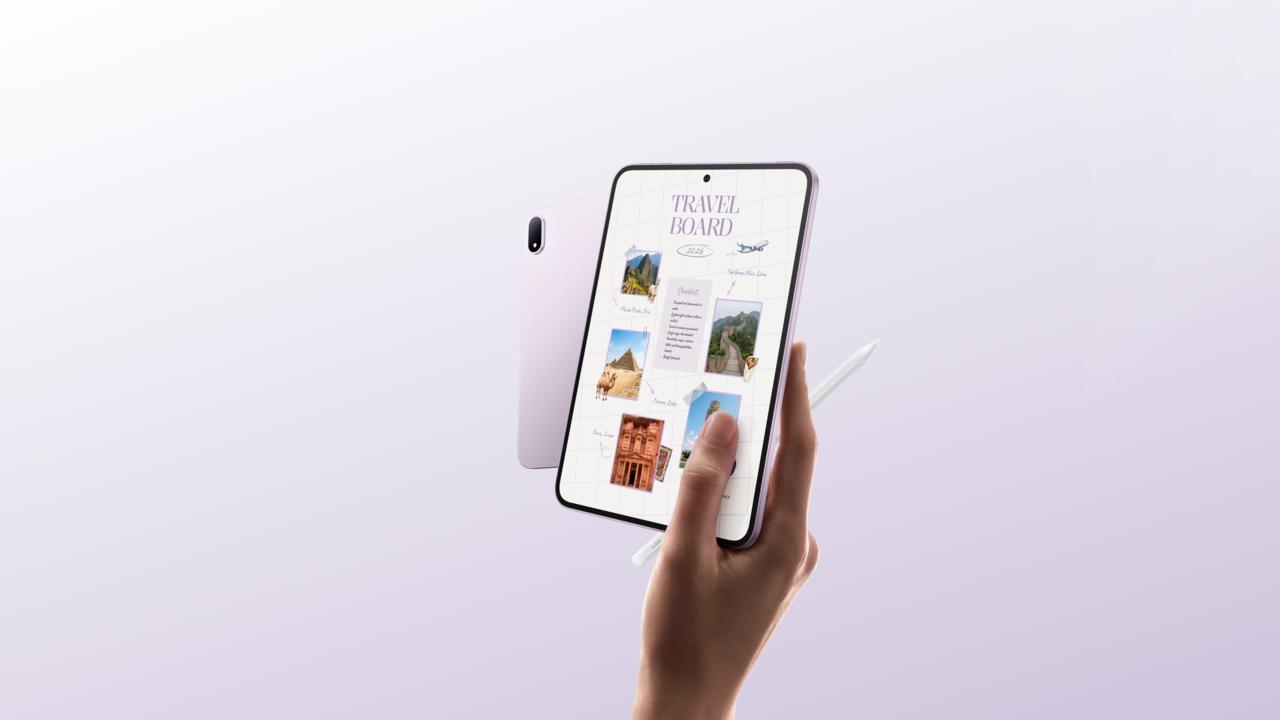
The official Oppo Pad Mini compact flagship tablet held in hand with stylus. (Image: Oppo India)
For years, Android tablet manufacturers treated smaller screens as a synonym for cheap hardware. If you wanted a premium, high-performance tablet with a screen under nine inches, Apple's iPad mini was effectively the only serious option on the market. Android brands flooded the sub-ten-inch category with underpowered budget slabs suitable only for basic media streaming.
That dynamic changed decisively on 24 October 2026. Oppo has introduced the Oppo Pad Mini to the Indian market at a retail price of 94,999 rupees. Packed with an 8.8-inch 144Hz OLED panel, Qualcomm's flagship Snapdragon 8 Gen 5 silicon, and an 8,000mAh battery, the device represents an uncompromising, ultra-premium compact tablet designed for creators, digital artists, and power gamers. Here is what this launch delivers and how it stacks up against Apple's compact ecosystem.
Quick Answer: Apple's first foldable smartphone, the iPhone Duo, officially went on sale on 23 October 2026 starting at 1,999 dollars (2,99,900 rupees in India). Early reviews praise its remarkably thin 5.2mm titanium frame and creaseless inner display, but highlight steep pricing, battery constraints, and shipping delays stretching into early 2027.
Last updated: 24 October 2026. Verified with official Apple retail stores, global delivery trackers, and hands-on reviews.
Apple's entry into the foldable hardware segment resets industry benchmarks for hinge engineering and screen flatness. Photo: Wikimedia Commons (CC BY-SA 4.0).
After years of patent leaks, supply-chain rumors, and skeptical executive commentary, Apple has officially entered the foldable smartphone era. On Friday, 23 October 2026, the iPhone Duo arrived on Apple Store shelves worldwide, marking the company's most radical industrial design pivot since the bezel-free iPhone X debuted in 2017.
The consumer reaction has been intense. Retail queues formed outside flagship locations from New York to London and Mumbai, while online delivery windows collapsed within minutes of order availability. But beneath the titanium luster and historic launch lines lies a complicated reality. Here is what real-world reviews, thermal benchmarks, and early buyers reveal about Apple's boldest hardware experiment.
Quick Answer: Security agencies have issued urgent emergency patch directives for dual critical vulnerabilities crippling core web infrastructure. A remote code execution flaw in Node.js's Brotli decoder (CVE-2026-111497) bypasses npm audit, while unauthenticated RCE bugs strike PHP servers worldwide. Systems running Node.js and PHP require immediate runtime binary upgrades to prevent remote compromise.
Last updated: 24 October 2026. Verified with official Node.js, PHP, CISA, and CERT-In security advisories.
Data centers and cloud hosting providers worldwide face urgent runtime patching cycles following foundational software flaws. (Image: My Tech Flux)
Security executives are calling it "Black October." Over a four-day span, two of the modern web's most fundamental software backbones have suffered catastrophic zero-day vulnerabilities. First came the PHP2Shell disclosures affecting millions of legacy and modern web servers. Now, a critical out-of-bounds write vulnerability dubbed "Node2Shell" has struck the core Node.js runtime.
Governments, enterprise security teams, and stock exchanges worldwide have mobilized emergency response plans. On 24 October, India's National Stock Exchange urged financial brokers to treat cyber defense as a core survival layer as automated scanning bots began probing exposed endpoints. Here is a technical breakdown of how these vulnerabilities operate, why your automated package scanners are failing, and the exact steps required to patch your systems.